
Does the Order of Eating Your Breakfast Matter?


A Simple South Indian Guide to Eating Carbs, Protein & Fiber the Smart Way
“Good morning folks, while having breakfast this morning, I thought about the best order to consume these breakfast items…”
That simple thought has now become one of the most interesting discussions in modern nutrition science. Surprisingly, the order in which we eat our food can influence blood sugar, energy levels, digestion, satiety, and even long-term metabolic health.
Imagine this breakfast:
Mixed Millet Porridge – 300 ml with almonds
One boiled egg
One sliced cucumber
Most of us would simply mix everything or eat randomly. But according to emerging nutrition research and practical metabolic science, the sequence can matter.
A smarter eating order would be:
✅ 1. Cucumber
✅ 2. Boiled Egg
✅ 3. Mixed Millet Porridge with Almonds
At first glance, this may sound unnecessary or overly scientific. But once you understand how the body processes food, it makes perfect sense — especially for people trying to avoid diabetes, manage weight loss, or move toward a healthier lifestyle built around whole foods and natural food.
🌿 Why Does Meal Order Matter?
When we eat, our body breaks down foods at different speeds.
Fiber slows digestion
Protein and fat slow glucose absorption
Refined carbohydrates digest quickly and raise blood sugar faster
If you eat carbohydrates first, especially processed carbs, blood sugar rises sharply. This spike is often followed by:
sudden hunger
energy crashes
cravings
long-term insulin resistance
This pattern contributes to several diet-related diseases, including obesity and type-2 diabetes.
But when you eat:
Fiber first
Protein/fat second
Carbs last
…the body absorbs glucose more gradually.
This creates:✔ steadier energy✔ better satiety✔ fewer sugar crashes✔ improved metabolic health
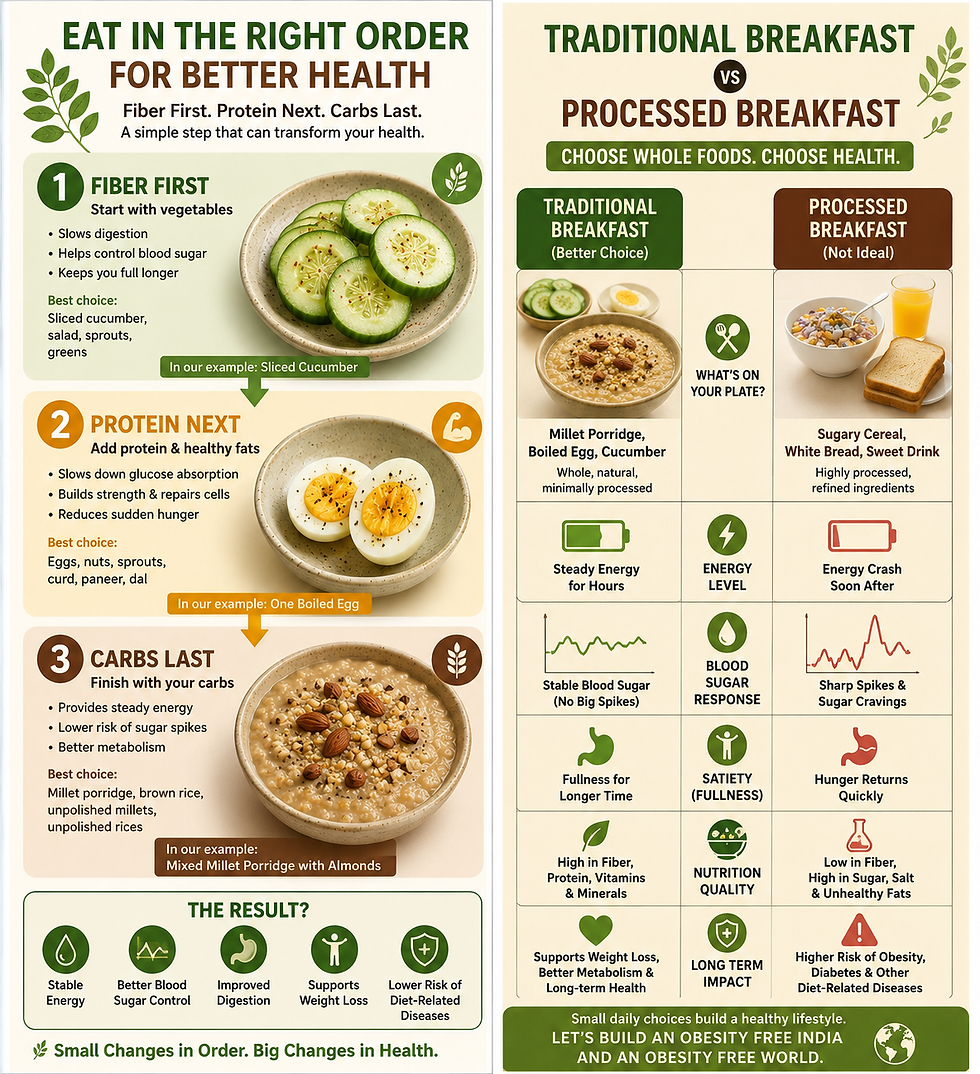
🥒 Step 1: Start With Fiber
In the breakfast example, cucumber comes first.
Why?
Cucumber contains:
water
fiber
minerals
almost no sugar
Eating fiber-rich foods first forms a gentle “mesh” inside the digestive system that slows how quickly carbohydrates later enter the bloodstream.
This is one reason traditional Indian meals often started with:
vegetables
kosambari
salads
lightly cooked greens
Our ancestors may not have used scientific terms like “glycemic response,” but they understood food wisdom deeply.
Other great “fiber first” foods:
cucumber
carrots
greens
sprouts
lightly steamed vegetables
soaked chia or flax seeds
These are excellent healthy foods that support digestion naturally.
🥚 Step 2: Add Protein & Healthy Fat
The boiled egg comes next.
Protein and healthy fats act like metabolic “brakes.”
They:
reduce hunger hormones
slow stomach emptying
help muscles recover
prevent rapid glucose spikes
That’s why after eating eggs or nuts, you feel satisfied longer.
The almonds already present in the millet porridge help too. Almonds provide:
healthy fats
magnesium
protein
fiber
This combination makes the breakfast far more balanced than processed cereal or white bread toast.
For vegetarians, good protein options include:
sprouted green gram
paneer
peanuts
curd
boiled channa
fermented dosa batter
When combined with unpolished millets, these foods create deeply nourishing meals.
🌾 Step 3: Eat Carbohydrates Last
Now comes the mixed millet porridge.
This is the main carbohydrate source in the meal.
But here’s the key difference:
Because fiber and protein were eaten first, the body handles the millet carbs more efficiently.
The glucose enters the bloodstream more slowly, resulting in:✔ better energy✔ less sleepiness✔ fewer cravings✔ improved insulin response
This becomes especially important today because India is witnessing a rapid rise in:
obesity
fatty liver
diabetes
metabolic syndrome
Moving toward an obesity free India may not require complicated diets. Sometimes, even changing the order of eating can help.
🌾 Why Minimally Processed Millets Matter
The example breakfast uses:
“Mixed millet porridge with almonds”
That detail is important.
If the porridge is made from:✔ minimally processed millets✔ traditional grains✔ unsweetened ingredients
…it becomes one of the best breakfast choices possible.
Unlike refined breakfast cereals, unpolished millets contain:
fiber
magnesium
antioxidants
slow-release carbohydrates
This is why millets are returning strongly into Indian kitchens — especially in urban centers promoting millets in Bangalore, Chennai, Hyderabad, and Coimbatore.
🍚 Why Unpolished Grains Are Better Than Refined Ones
Refined grains digest rapidly because the outer bran layer is removed.
That means:❌ less fiber❌ fewer minerals❌ faster glucose spikes
But unpolished rices and whole millets retain their bran layer.
This improves:
satiety
gut health
digestion
blood sugar stability
Traditional Indian diets naturally included:
red rice
hand-pounded rice
foxtail millet
little millet
barnyard millet
These are true whole foods — not factory-made calorie fillers.
🌍 The Traditional Indian Wisdom We Forgot
Interestingly, many traditional Indian meal patterns already followed good metabolic principles.
Think about a classic South Indian meal:
Vegetable poriyal
Kootu or dal
Rice with curry
Buttermilk
This naturally created:✔ fiber first✔ protein second✔ carbs later
Modern processed eating reversed this.
Today’s breakfast often looks like:
sugary cereals
white bread
biscuits
sweet tea
These foods digest rapidly and create energy crashes.
Returning to natural food traditions could dramatically improve public health and reduce diet-related disease.
🧠 Interesting Fact: Japanese Research on Meal Order
Several Japanese studies found that eating vegetables before rice significantly reduced blood sugar spikes after meals.
Researchers observed:
lower insulin demand
improved glucose control
better fullness
This is especially important for populations vulnerable to diabetes, including Indians.
🥣 Smart Breakfast Combinations
Here are better ways to structure breakfast:
✔ Option 1
Cucumber → Boiled egg → Millet porridge
✔ Option 2
Vegetable salad → Sprouts → Brown rice kanji
✔ Option 3
Steamed vegetables → Peanut chutney → Ragi dosa
✔ Option 4
Fruit (low GI) → Paneer → Foxtail millet upma
These combinations support:
weight loss
stable energy
reduced inflammation
better digestion
🌿 Why This Matters for the Future of India
India is rapidly becoming the diabetes capital of the world.
One major reason:
added sugar
low-fiber diets
sedentary lifestyle patterns
Returning to:✔ healthy foods✔ whole foods✔ unpolished millets✔ unpolished rices
…can play a major role in creating an obesity free world.
Sometimes prevention begins with very small changes:
soaking grains properly
reducing sugar
eating slower
changing meal order
❓ FAQs
1. Does food order really affect blood sugar?
Yes. Studies show that eating fiber and protein before carbohydrates reduces glucose spikes.
2. Why eat cucumber before breakfast carbs?
Cucumber provides water and fiber that slow digestion and improve fullness.
3. Are millet porridges good for diabetes?
Yes. Especially when made from minimally processed unpolished millets without added sugar.
4. Is brown rice better than polished rice?
Absolutely. Brown rice and unpolished rices contain more fiber and nutrients.
5. Can this eating method help with weight loss?
Yes. Eating fiber and protein first reduces hunger and overeating.
6. Should carbohydrates be avoided completely?
No. The quality and timing matter more. Whole grains and millets are excellent carb sources.
🌟 Final Thoughts
The future of health may not lie in expensive supplements or extreme diets.
Sometimes, the simplest wisdom matters most:
eat slowly
eat real food
prioritize fiber
choose whole grains
avoid ultra-processing
A bowl of millet porridge, eaten mindfully after fiber and protein, may look simple — but it reflects generations of nutritional intelligence.
By choosing natural food, whole foods, and traditional grains, we take one more step toward:✔ better energy✔ better digestion✔ healthier metabolism✔ an obesity free India
The body understands simplicity.And often, health begins not just with what we eat — but how we eat it.


Comments