
Why Aging Seems to Speed Up After 40: The Real Reasons Behind It and What You Can Do About It


There comes a moment in life when many of us begin to notice subtle changes. A small back strain takes weeks instead of days to heal. The weight that once disappeared after a few days of careful eating suddenly refuses to budge. Energy levels seem lower, sleep becomes lighter, and recovering from a busy week takes longer than it used to.
For many South Indians in their 40s and beyond, these experiences are often dismissed as "just getting older." But science tells a different story.
The truth is that aging doesn't suddenly accelerate because the calendar says you've turned 40. Instead, several biological processes begin to change around this age, making the effects of aging more noticeable. The good news is that understanding these changes can help you make smarter choices that improve your health, energy, and quality of life for years to come.
Let's explore why aging seems to speed up after 40 and what you can do about it.
Aging After 40: It's Not Just About Age
One interesting fact is that researchers today talk less about chronological age and more about biological age.
Two people may both be 50 years old, but one may have the energy, strength, and metabolic health of a 40-year-old, while the other may have the health profile of someone much older.
What makes the difference?
According to current research, three major biological shifts begin accelerating around our 40s:
Hormonal decline
Reduced mitochondrial efficiency
Chronic inflammation and insulin resistance
These three factors interact with each other and can create a cycle that accelerates aging.
1. Hormonal Changes: The Hidden Driver of Aging

Hormones act as the body's internal communication system. They regulate everything from energy levels and sleep to muscle mass and mood.
For Men
Testosterone levels typically begin declining gradually after the age of 30. While the drop may seem small each year, it becomes significant over time.
Lower testosterone levels can contribute to:
For Women
Women often experience more dramatic hormonal shifts during perimenopause and menopause.
Declining estrogen levels can affect:
Fat distribution
Bone health
Sleep quality
Mood
Brain function
Metabolic health
Many women notice increased abdominal fat, brain fog, and sleep disturbances during this phase.
A South Indian Perspective
Many women assume these changes are simply part of aging and must be tolerated. However, lifestyle improvements and appropriate medical guidance can significantly improve quality of life during this transition.
2. Your Body's Energy Factories Start Slowing Down

Inside every cell are tiny structures called mitochondria.
Think of them as miniature power stations that convert food and oxygen into usable energy.
When we are younger, these power stations operate efficiently. After 40, however, they begin to lose efficiency.
This means:
Less energy production
Greater fatigue
Slower recovery
Reduced exercise performance
Increased oxidative stress
An Interesting Fact
By some estimates, the average person may lose mitochondrial efficiency by up to 8-10% per decade after middle age if they remain sedentary.
This helps explain why activities that felt effortless in your 20s and 30s can feel surprisingly demanding after 40.
The encouraging news is that mitochondria respond remarkably well to exercise. Even people in their 60s and 70s can stimulate the growth of new mitochondria through regular physical activity.
3. Chronic Inflammation: The Silent Aging Accelerator
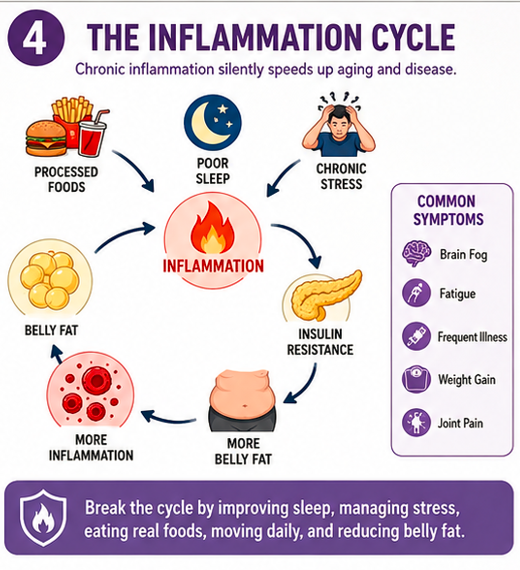
Inflammation is the body's natural defence mechanism. When you get injured or develop an infection, inflammation helps with healing.
The problem arises when inflammation remains active all the time.
Researchers now use the term "inflammaging" to describe the chronic low-grade inflammation associated with aging.
Common Causes Include:
Poor sleep
Chronic stress
Excess abdominal fat
Lack of exercise
Diets high in ultra-processed foods
This persistent inflammation can affect nearly every organ system in the body.
It contributes to:
Joint pain
Fatigue
Diabetes
Cognitive decline
Weight gain
One of the biggest misconceptions is that belly fat is simply stored energy.
In reality, visceral fat—the deep fat surrounding internal organs—is biologically active.
It produces inflammatory chemicals that worsen aging.
This is particularly important in India, where many people develop abdominal obesity even when they are not significantly overweight.
This phenomenon is sometimes called the "thin-fat Indian" problem.
A person may appear reasonably slim but still carry unhealthy amounts of visceral fat, increasing the risk of diabetes and other diet-related disease conditions.
Why Diabetes Risk Increases After 40
India is often referred to as the diabetes capital of the world.
One reason is that inflammation, hormonal changes, and reduced muscle mass all contribute to insulin resistance.
When insulin resistance develops:
Blood sugar levels rise
The body produces more insulin
Fat storage increases
Weight loss becomes harder
This creates a vicious cycle.
The more abdominal fat you gain, the more inflammation increases, which further worsens insulin resistance.
Breaking this cycle becomes one of the most important goals after 40.
The Three Most Powerful Levers to Slow Aging
The encouraging news is that you don't need expensive supplements or complicated biohacks.
Three simple strategies can dramatically improve healthy aging.
1. Build Muscle
Muscle is one of the most underrated organs in the human body.
It is not just for strength or appearance.
Muscle helps:
Control blood sugar
Improve metabolism
Support hormone balance
Maintain mobility
Improve longevity
What Should You Do?
Aim for strength training 2-3 times per week.
This can include:
Bodyweight exercises
Resistance bands
Dumbbells
Gym workouts
Even walking stairs regularly can contribute to maintaining muscle strength.
Research consistently shows that maintaining muscle mass is one of the strongest predictors of healthy aging.
2. Reduce Inflammation
The food choices we make every day directly influence inflammation.
The focus should not be on dieting but on eating more whole foods and fewer processed products.
Choose More:
Vegetables
Fruits
Lentils
Nuts
Seeds
Traditional South Indian preparations
Include More Fiber Rich Foods
Fiber helps support gut health, blood sugar control, and inflammation reduction.
Excellent sources include:
Legumes
Vegetables
Fruits
Many people searching for millets in Bangalore are doing so because they are rediscovering the health benefits of these traditional grains.
Options such as ragi, foxtail millet, little millet, and kodo millet provide nutrients and fibre often missing from modern diets.
3. Balance Your Hormones Naturally
While medical treatment may be necessary for some individuals, lifestyle changes remain the foundation of hormonal health.
Prioritize Sleep
Most hormone repair and recovery happens during sleep.
Aim for:
7-8 hours of quality sleep
Consistent sleep timing
Reduced screen exposure before bedtime
Reduce Visceral Fat
For men especially, reducing abdominal fat can help improve testosterone levels naturally.
Manage Stress
Traditional South Indian practices such as yoga, meditation, pranayama, and daily walking continue to be among the most effective tools for lowering stress hormones.
Returning to Traditional Eating Patterns
One of the most fascinating developments in nutrition science is that many modern recommendations resemble how our grandparents ate.
Traditional South Indian meals naturally included:
Seasonal vegetables
Fermented foods
Lentils
Coconut
Today, many health-conscious families are returning to natural food choices such as unpolished millets and unpolished rices instead of heavily refined grains.
These foods generally retain more fibre, vitamins, minerals, and natural nutrients.
Combined with an active lifestyle, they can support better metabolic health and help reduce the risk of chronic diseases.
Healthy Aging Is About More Than Weight Loss
Many people focus exclusively on weight loss after 40.
But the real goal should be preserving:
Strength
Energy
Mobility
Mental sharpness
Independence
A lighter body is not always a healthier body.
A stronger body almost always is.
The aim should be to build a lifestyle that supports long-term health rather than chasing short-term results.
Frequently Asked Questions (FAQs)
1. Is it normal to feel more tired after 40?
Yes. Hormonal changes, reduced mitochondrial efficiency, and increased inflammation can all contribute to lower energy levels. However, severe fatigue should always be discussed with a healthcare professional.
2. Can aging be reversed after 40?
You cannot stop aging completely, but many aspects of biological aging can be slowed. Regular exercise, healthy foods, quality sleep, and stress management can significantly improve health and vitality.
3. Are millets better than rice for people over 40?
Both can be part of a healthy diet. However, many traditional millets contain more fibre and nutrients than refined grains, making them useful for blood sugar control and overall metabolic health.
4. Why is belly fat so difficult to lose after 40?
Hormonal changes, reduced muscle mass, and insulin resistance all contribute to increased fat storage, especially around the abdomen.
5. How much exercise should people over 40 get?
Most experts recommend at least 150 minutes of moderate activity per week along with two or three strength-training sessions.
6. Can traditional South Indian foods support healthy aging?
Absolutely. Traditional diets rich in vegetables, legumes, fermented foods, healthy fats, and minimally processed grains provide many nutrients that support long-term health.
Final Thoughts

Turning 40 is not the beginning of decline. It is simply a stage where the body's biology demands a little more attention.
The real secret to healthy aging is not found in expensive supplements or miracle diets. It lies in building muscle, reducing inflammation, improving sleep, eating whole foods, and staying active.
Small daily choices—choosing a morning walk over an extra hour of screen time, selecting unpolished grains over refined ones, or prioritizing sleep over late-night scrolling—can compound into remarkable benefits over the years.
Aging may be inevitable, but feeling old doesn't have to be. The choices you make today can help ensure that the decades ahead are not only longer but healthier, stronger, and more enjoyable.


Comments